

Peer thinks about another Peer.
There are many use cases where you don’t want every agent or human to know
everything about another user such as games or multi-agent workflows. To
illustrate this, the following examples shows 2 conversations.
Conversation #1 (With Bob and Alice)
Peers and let them
use Honcho to get insights on each other then Bob would immediately know this
deception. For example:
Peer are scoped globally. This means every
message sent by that Peer in any conversation updates the same representation
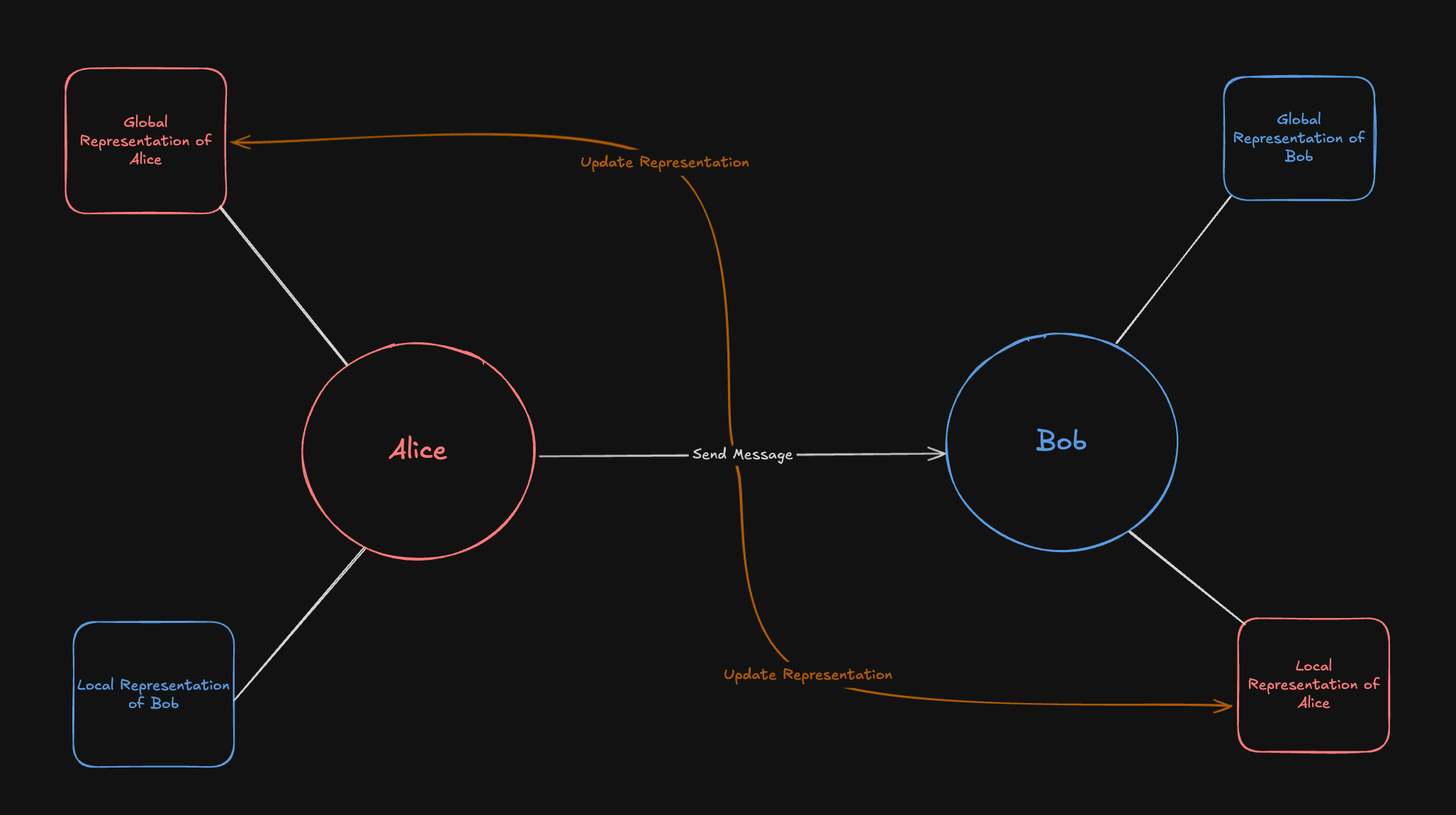
of that Peer. However, we can enable Local Representations so Bob can
form a representation Alice based only on what they observe Alice do.
This feature is illustrated in the graphic below:
Peer by setting observe_others=True.
This is shown in the Configure
Reasoning page.
Now if we used Bob’s local representation of Alice then Bob would only get
insights on what they’ve seen Alice say to them.
Local Representations are turned off by default